Technology Trends Shaping Digital Platforms in 2026
Most technology trends never make it past the hype cycle. The ones that matter change how digital platforms are actually built and operated. This article breaks down the technology trends shaping digital platforms in 2026, with a practical look at web, mobile, cloud, and AI focused on execution, not speculation.

Every year brings a flood of predictions about the “next big thing” in technology. Most of it is noise. Only a small set of trends actually change how digital platforms are designed, built, and operated in production.
These technology trends shaping digital platforms in 2026 reflect how modern web, mobile, cloud, and AI systems are being built, scaled, and run today not theoretical ideas or lab experiments.
These trends cut across web, mobile, cloud, and AI because modern digital platforms no longer treat those disciplines as separate initiatives. They are designed, delivered, and evolved together.
Why These Technology Trends Are Shaping Digital Platforms in 2026
The most important shift we’re seeing isn’t about tools it’s about maturity. Teams are moving away from isolated experiments and toward platforms that are resilient, extensible, and grounded in real operational needs.
The trends below represent what’s moving from “emerging” to “expected” in modern digital platforms.
Trend 1 – AI Moves From Features to Embedded Capability
AI is no longer something teams bolt onto a product to make it feel modern. It’s becoming an embedded capability inside platforms—quietly improving decisions, automating repetitive work, and reducing friction across workflows.
Instead of asking where AI can be added, teams are asking where intelligence can remove manual effort or improve outcomes without disrupting how users work.
Why it matters now
The tooling has matured, infrastructure is easier to manage, and costs are more predictable. At the same time, users are far less impressed by novelty. Reliability and usefulness matter more than labels.
AI that fits naturally into existing workflows delivers value without forcing behavior change.
Where we’re seeing it applied
Embedded AI is showing up in admin tools, operational dashboards, content workflows, search experiences, and decision support systems. In many cases, users don’t even realize AI is involved they just notice that things work better.
What to watch for in 2026
The differentiator won’t be who adds more AI features. It will be who integrates intelligence cleanly into their platforms without increasing complexity or risk.
Trend 2 – Retrieval-Augmented Generation (RAG) Becomes the Default AI Pattern
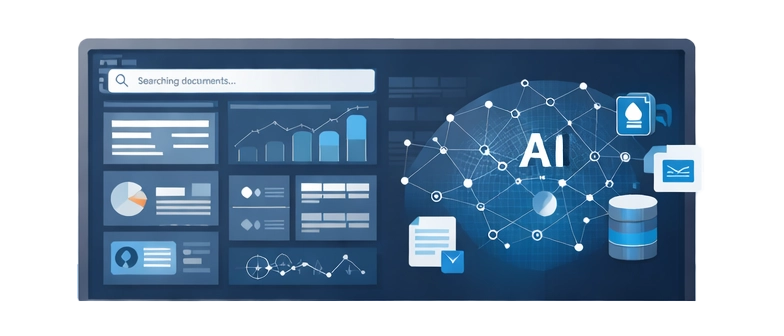
Rather than relying on generic model knowledge, teams are grounding AI outputs in their own data—documents, knowledge bases, transaction history, and system records—using Retrieval-Augmented Generation.
This allows AI systems to produce responses that are current, relevant, and traceable back to real sources.
Why it matters now
Accuracy and trust are now gating factors for AI adoption. RAG reduces hallucinations, improves explainability, and gives teams control over what the system can reference.
It also avoids the cost and risk of full model training while delivering far more useful results.
Where we’re seeing it applied
RAG is being used for internal knowledge tools, customer support platforms, operational documentation, reporting, and compliance-sensitive workflows—areas where correctness matters more than creativity.
What to watch for in 2026
As RAG becomes standard, the quality of underlying data will matter more than the model itself. Data structure, access controls, and indexing strategies will be the real differentiators.
Trend 3 – Platform Modernization Overtakes Net-New Builds
More organizations are modernizing the platforms they already depend on rather than replacing them outright. That includes re-architecting cores, decoupling front ends, modernizing data layers, and wrapping legacy systems with APIs.
Modernization today is incremental, intentional, and tied to business outcomes.
Why it matters now
Most production systems are too embedded to replace wholesale. At the same time, those systems must support new channels, integrations, and intelligent capabilities.
Platform modernization strategies allow teams to unlock flexibility without stopping the business.
Where we’re seeing it applied
We see this most often in order management, logistics, content platforms, commerce systems, and internal operational tools—systems that must evolve without downtime.
What to watch for in 2026
Successful modernization efforts will be measured by delivery velocity and business impact, not technical milestones or full rewrites.
Trend 4 – API-First and Event-Driven Architectures Go Mainstream
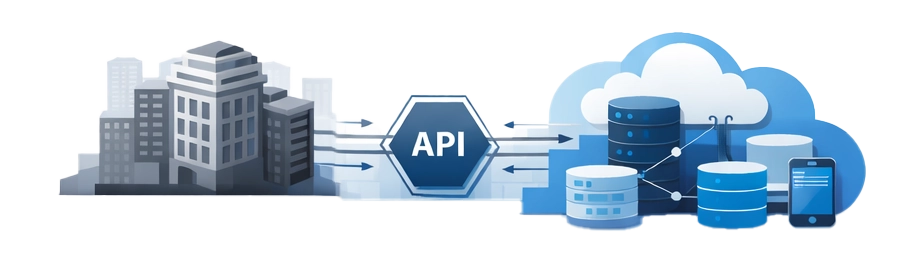
Integration is no longer an afterthought. Platforms are increasingly designed around APIs and events from the start, allowing systems to communicate in real time and evolve independently.
APIs define how systems interact. Events define when things happen.
Why it matters now
Modern digital platforms rarely operate in isolation. They integrate with partners, internal systems, and external services, often in real time.
API-first architecture reduces coupling and makes change easier as platforms scale.
Where we’re seeing it applied
This pattern is common in multi-channel platforms supporting web and mobile experiences, operational workflows, and third-party integrations.
Event-driven systems are increasingly used for order processing, status updates, notifications, and workflow automation.
What to watch for in 2026
Governance will become critical. Versioning, security, and observability will separate well-designed platforms from fragile ones.
Trend 5 – Data Engineering Becomes a Priority Concern
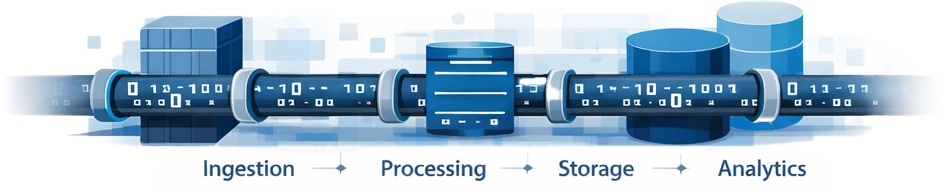
Data engineering is no longer a background function. Reliable pipelines, governed datasets, and well-defined data models are now prerequisites for analytics, automation, and AI.
Without strong data foundations, advanced capabilities break down quickly.
Why it matters now
As platforms rely more on real-time insight and intelligent systems, the cost of poor data quality becomes obvious—slow decisions, unreliable outputs, and loss of trust.
Where we’re seeing it applied
Teams are investing in ingestion pipelines, event streams, data warehouses, and reporting layers—often as part of broader digital platform modernization efforts.
What to watch for in 2026
Ownership, governance, and observability will matter more than tooling choices. Clean data will be a competitive advantage.
Trend 6 – Composable and Headless Architectures Expand Beyond CMS
Composable and headless approaches are no longer limited to content management. Teams are applying them across commerce, portals, internal tools, and multi-channel platforms.
This separates experience layers from core systems so each can evolve independently.
Why it matters now
User expectations change faster than back-end systems can. Decoupling front ends from core logic allows teams to adapt interfaces without destabilizing operations.
Where we’re seeing it applied
Headless architectures are powering eCommerce platforms, customer portals, partner dashboards, and admin systems backed by shared APIs.
What to watch for in 2026
Teams will be more selective. Composability delivers value when it’s intentional—not when it adds unnecessary complexity.
Trend 7 – Automation Shifts From Task-Level to Workflow-Level
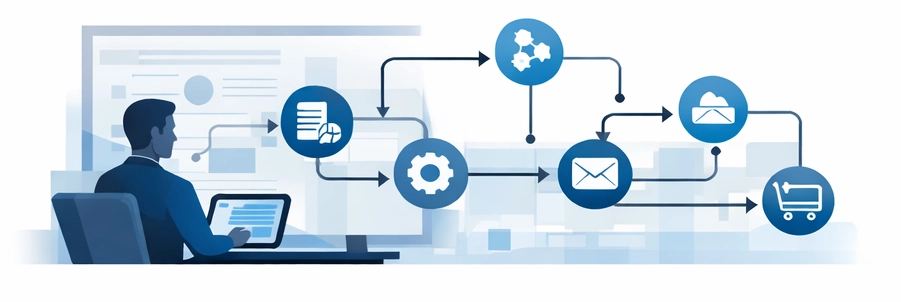
Automation is moving beyond scripts and isolated tasks. Teams are orchestrating end-to-end workflows across systems connecting approvals, fulfillment, notifications, and operations.
Automation is becoming a platform capability.
Why it matters now
Isolated automation creates marginal gains. Workflow orchestration creates leverage by reducing handoffs, errors, and delays across teams.
Where we’re seeing it applied
Workflow automation is common across order lifecycles, dispatch, onboarding, compliance processes, and internal operations, often coordinated through APIs and events.
What to watch for in 2026
Monitoring, exception handling, and human-in-the-loop design will become critical as automation scales.
Trend 8 – Engineering Execution and Governance Become Differentiators
As platforms grow more complex, the biggest differentiator is no longer tooling—it’s execution. Clear architecture decisions, delivery discipline, and governance frameworks separate teams that move quickly from those that stall.
Execution quality is now a competitive advantage.
Why it matters now
Modern digital platforms touch more systems, data, and users than ever before. Without clarity, complexity compounds rapidly.
Where we’re seeing it applied
Teams are investing in phased delivery models, architectural reviews, ownership boundaries, and outcome-driven planning across web, mobile, cloud, and AI initiatives.
What to watch for in 2026
The goal of governance isn’t control—it’s clarity. Teams that invest early will move faster over time
What These Technology Trends Shaping Digital Platforms means for Teams and Companies in 2026
The technology trends shaping digital platforms in 2026 reward teams that:
- Invest in strong foundations before chasing features
- Modernize platforms incrementally instead of rewriting everything
- Treat AI, data, and automation as embedded capabilities
- Prioritize execution discipline over tooling novelty
Trends come and go but platform decisions tend to last.
The teams getting the most value from these trends aren’t chasing headlines. They’re making deliberate decisions about architecture, data, and execution based on where they want their platforms to be a year from now.